
What is Ayurveda? Best Complete Guide for Beginners in 2026
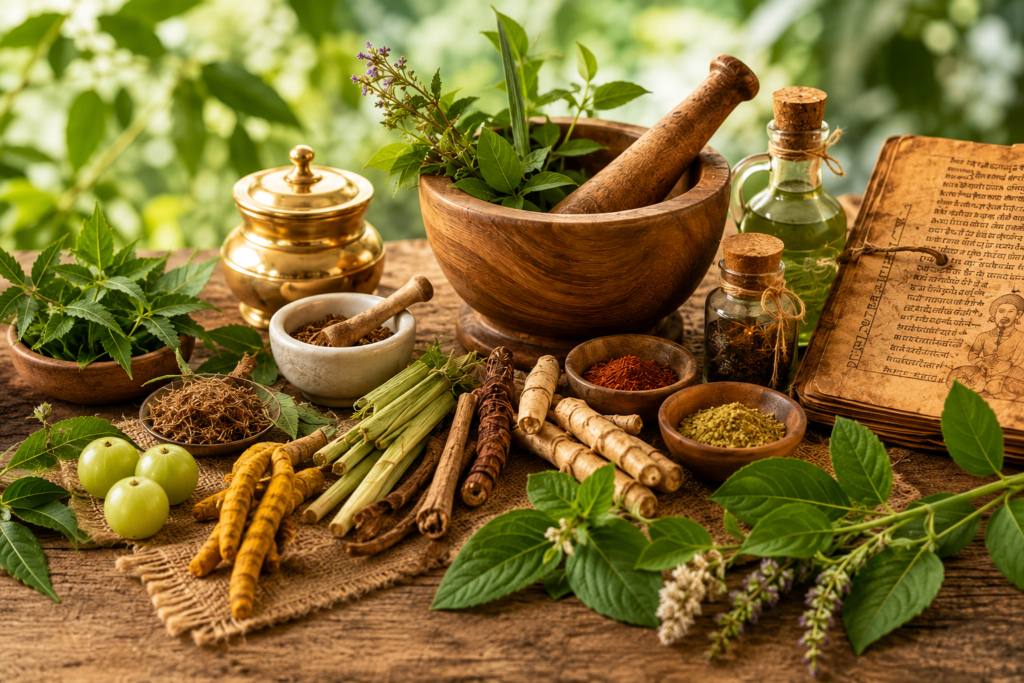
Introduction
Ayurveda is one of the world’s oldest holistic healthcare systems, with a history spanning more than 5,000 years. Originating in India, Ayurveda focuses on maintaining the balance of the body, mind, and spirit rather than simply treating diseases after they occur. The word Ayurveda comes from the Sanskrit words “Ayur” (Life) and “Veda” (Knowledge or Science), meaning “The Science of Life.”
Unlike modern medicine, which often focuses on treating symptoms, Ayurveda emphasizes identifying the root cause of health concerns and restoring the body’s natural balance through diet, lifestyle, herbal formulations, yoga, meditation, and other natural therapies.
Today, Ayurveda has gained worldwide recognition as people increasingly seek natural and preventive approaches to health. Millions of individuals across the globe use Ayurvedic principles to support digestion, immunity, stress management, skin health, joint wellness, and overall quality of life.
In this comprehensive beginner’s guide, you’ll learn what Ayurveda is, its fascinating history, the fundamental principles behind this ancient science, the concept of the three doshas, its benefits, commonly used herbs, treatment methods, and how Ayurveda continues to play an important role in modern healthcare.
Table of Contents
- What is Ayurveda?
- History of Ayurveda
- Basic Principles of Ayurveda
- The Three Doshas
- Benefits of Ayurveda
- Common Ayurvedic Treatments
- Popular Ayurvedic Herbs
- Ayurvedic Diet & Lifestyle
- Ayurveda in Modern Healthcare
- Frequently Asked Questions
- Conclusion
What is Ayurveda?
Ayurveda is a traditional system of medicine that focuses on achieving and maintaining optimal health by balancing the body’s natural energies. Rather than treating illness alone, Ayurveda promotes a preventive approach that encourages healthy daily habits, proper nutrition, regular physical activity, mental well-being, and harmony with nature.
According to Ayurvedic philosophy, every individual has a unique body constitution known as Prakriti. This constitution influences physical characteristics, digestion, metabolism, emotional tendencies, and susceptibility to certain health conditions. By understanding an individual’s constitution, Ayurvedic practitioners recommend personalized dietary habits, herbal formulations, and lifestyle practices that help maintain long-term wellness.
Ayurveda views health as a balance between:
- Physical Health
- Mental Well-being
- Emotional Stability
- Spiritual Harmony
- Healthy Digestion
- Balanced Lifestyle
When these aspects remain balanced, the body functions efficiently and is better prepared to resist illness naturally.
Core Objectives of Ayurveda
Ayurveda primarily focuses on two important goals:
1. Preserving the Health of Healthy Individuals
Ayurveda encourages preventive healthcare through proper diet, seasonal routines, exercise, adequate sleep, stress management, and daily self-care practices.
2. Supporting Individuals with Health Conditions
For people experiencing health concerns, Ayurveda aims to identify possible root causes and support overall wellness through individualized lifestyle recommendations, herbal preparations, dietary guidance, and traditional therapies under the supervision of qualified practitioners.
Why is Ayurveda Becoming Popular Worldwide?
The growing popularity of Ayurveda is largely driven by increasing awareness of preventive healthcare and natural wellness. Many people today seek holistic approaches that focus not only on managing symptoms but also on improving long-term health and quality of life.
Some reasons for its growing acceptance include:
- Focus on prevention rather than cure
- Personalized healthcare approach
- Natural herbal formulations
- Lifestyle-based wellness
- Stress management techniques
- Integration of yoga and meditation
- Support for overall physical and mental well-being
Today, Ayurvedic products and wellness practices are used in many countries alongside modern healthcare as part of an integrative approach to healthy living.
History of Ayurveda
Ayurveda is considered one of the oldest systems of medicine in the world, with origins dating back more than 5,000 years in India. It evolved through centuries of observation, experience, and knowledge passed down by ancient sages (Rishis). Rather than focusing only on treating diseases, Ayurveda was developed as a complete system for maintaining physical health, mental well-being, and a balanced lifestyle.
The principles of Ayurveda are deeply rooted in the Vedas, particularly the Atharva Veda, where early references to health, healing practices, medicinal herbs, and disease prevention can be found. Over time, this knowledge was organized into detailed medical texts that continue to influence Ayurvedic practice today.
Among the most respected classical texts are the Charaka Samhita, which primarily focuses on internal medicine and preventive healthcare, and the Sushruta Samhita, renowned for its detailed descriptions of surgery, anatomy, and surgical instruments. Another important work, the Ashtanga Hridaya, combines medical knowledge with practical lifestyle guidance for maintaining overall wellness.
For thousands of years, Ayurveda has emphasized that good health depends on maintaining harmony between the body, mind, and environment. This philosophy remains one of the key reasons why Ayurveda continues to be practiced and respected across the world.
Today, Ayurvedic principles are used not only in India but also in many countries where people seek natural approaches to health, wellness, and preventive care.
Major Milestones in the History of Ayurveda
| Period | Development |
|---|---|
| Around 3000 BCE | Early Ayurvedic knowledge passed through oral traditions by ancient sages. |
| Vedic Period | Health and healing concepts documented in the Atharva Veda. |
| Around 600 BCE | Compilation of Charaka Samhita and Sushruta Samhita. |
| Medieval Period | Expansion of Ayurvedic education and herbal medicine. |
| Modern Era | Ayurveda gains global recognition as a complementary wellness system. |
Basic Principles of Ayurveda
Ayurveda is based on the belief that every individual is unique. Good health is achieved by maintaining balance within the body rather than simply treating symptoms after illness develops.
According to Ayurveda, the body functions best when digestion, metabolism, mental health, daily routines, nutrition, and natural biological energies remain balanced. Lifestyle choices, seasonal changes, diet, sleep patterns, and emotional well-being all influence overall health.
Unlike a one-size-fits-all approach, Ayurveda encourages personalized recommendations based on an individual’s body constitution, age, environment, and daily habits.
The main principles of Ayurveda include:
- Maintaining balance between body, mind, and spirit.
- Preventing illness through healthy lifestyle practices.
- Supporting digestion and metabolism.
- Following seasonal routines (Ritucharya).
- Following daily routines (Dinacharya).
- Consuming fresh, wholesome foods suitable for individual needs.
- Managing stress through yoga, meditation, and adequate rest.
- Supporting overall wellness using appropriate herbal preparations under professional guidance.
The Five Elements (Panchamahabhutas)
According to Ayurveda, everything in nature, including the human body, is made up of five fundamental elements.
| Element | Represents |
|---|---|
| Earth | Stability and structure |
| Water | Fluid balance and nourishment |
| Fire | Digestion and metabolism |
| Air | Movement and circulation |
| Space | Expansion and communication |
These five elements combine in different proportions to form the body’s biological energies known as the Three Doshas.
The Three Doshas
One of the most important concepts in Ayurveda is the theory of the Three Doshas. Every person has a unique combination of these doshas, which influences their physical characteristics, digestion, metabolism, personality, and overall health.
The three doshas are:
- Vata
- Pitta
- Kapha
Although everyone possesses all three doshas, one or two usually dominate, creating an individual’s unique body constitution (Prakriti).
Maintaining balance among these doshas is considered essential for long-term health and well-being.
Vata Dosha
Vata is associated with movement throughout the body. It governs breathing, circulation, nerve impulses, communication, and muscle movement.
Characteristics
- Light
- Dry
- Cold
- Mobile
- Quick
When balanced, Vata supports creativity, flexibility, enthusiasm, and energy. When imbalanced, it may contribute to dryness, irregular digestion, restlessness, or disturbed sleep.
Pitta Dosha
Pitta is responsible for digestion, metabolism, body temperature regulation, and various biochemical processes.
Characteristics
- Warm
- Sharp
- Intense
- Oily
- Light
When balanced, Pitta supports good digestion, intelligence, focus, and healthy metabolism. When imbalanced, it may be associated with excess heat, irritability, or digestive discomfort.
Kapha Dosha
Kapha provides structure, lubrication, stability, and nourishment throughout the body.
Characteristics
- Heavy
- Cool
- Moist
- Stable
- Smooth
When balanced, Kapha promotes strength, endurance, emotional stability, and healthy immunity. When imbalanced, it may be associated with sluggishness, heaviness, or reduced energy levels.
Dosha Comparison Table
| Dosha | Primary Function | Dominant Qualities |
|---|---|---|
| Vata | Movement | Dry, Light, Mobile |
| Pitta | Digestion & Metabolism | Hot, Sharp, Intense |
| Kapha | Stability & Nourishment | Heavy, Cool, Stable |
Benefits of Ayurveda
Ayurveda is not only a traditional system of medicine but also a comprehensive approach to healthy living. It emphasizes disease prevention, balanced nutrition, healthy routines, and overall well-being rather than focusing solely on treating illnesses after they occur.
Some of the key benefits associated with Ayurvedic principles include:
- Supports overall wellness through healthy lifestyle practices.
- Encourages healthy digestion and metabolism.
- Promotes better daily routines and sleep habits.
- Supports stress management through yoga and meditation.
- Encourages mindful eating and seasonal nutrition.
- Uses traditionally recognized herbs under professional guidance.
- Focuses on preventive healthcare.
- Promotes harmony between body, mind, and lifestyle.
Note: Individual results may vary. Ayurvedic care should be personalized and guided by a qualified practitioner when appropriate.
Common Ayurvedic Treatments
Ayurveda includes various traditional therapies that aim to support overall health and wellness.
Herbal Preparations
Ayurvedic herbs are traditionally used to support different aspects of health. These preparations should always be used according to professional advice.
Panchakarma
Panchakarma is a traditional detoxification and rejuvenation program that includes specialized therapies performed under expert supervision.
Diet Therapy
Ayurveda emphasizes eating fresh, seasonal, and balanced foods that suit an individual’s body constitution.
Yoga
Regular yoga practice supports flexibility, balance, strength, and overall well-being.
Meditation
Meditation is encouraged to promote mental calmness, focus, and emotional balance.
Abhyanga (Oil Massage)
Traditional oil massage is used in Ayurveda to support relaxation and overall wellness.
Popular Ayurvedic Herbs
Many herbs have been traditionally used in Ayurveda for centuries.
| Herb | Traditionally Used For |
|---|---|
| Ashwagandha | General wellness and stress management |
| Tulsi | Respiratory wellness and immunity support |
| Turmeric | Traditional wellness and antioxidant support |
| Neem | Skin care and traditional cleansing practices |
| Giloy | General wellness and immune support |
| Triphala | Digestive wellness |
| Amla | Vitamin C source and overall health |
These traditional uses are based on Ayurvedic practice and should not be considered medical claims.
Ayurvedic Diet & Lifestyle
Diet and lifestyle are central to Ayurveda.
Healthy habits commonly encouraged include:
- Eat freshly prepared meals.
- Prefer seasonal fruits and vegetables.
- Drink adequate water throughout the day.
- Maintain regular meal timings.
- Get sufficient sleep.
- Stay physically active.
- Practice yoga and meditation regularly.
- Reduce excessive processed foods.
- Manage stress through healthy routines.
Ayurveda believes that consistent daily habits contribute significantly to long-term health and wellness.
Ayurveda in Modern Healthcare
In recent years, Ayurveda has gained increasing global recognition as part of an integrative approach to health and wellness. Many individuals choose Ayurvedic lifestyle practices alongside conventional healthcare to support healthy living.
Research into Ayurvedic herbs and traditional practices continues in several areas. While scientific evidence is growing, more high-quality research is needed for many applications. Therefore, Ayurveda should complement—not replace—professional medical advice, diagnosis, or treatment when required.
Frequently Asked Questions (FAQ)
Is Ayurveda safe?
When practiced appropriately and guided by qualified professionals, Ayurveda can be part of a healthy lifestyle. Always consult a healthcare professional before starting any new treatment or herbal product.
Can Ayurveda be used every day?
Many Ayurvedic lifestyle practices, such as balanced nutrition, yoga, meditation, and healthy routines, can be incorporated into daily life.
Is Ayurveda only about herbal medicines?
No. Ayurveda includes nutrition, lifestyle, yoga, meditation, seasonal routines, daily routines, and traditional therapies in addition to herbal preparations.
What is the main goal of Ayurveda?
The primary goal of Ayurveda is to maintain health, prevent illness, and promote balance between the body, mind, and lifestyle.
Does Ayurveda replace modern medicine?
No. Ayurveda is best viewed as a complementary system of wellness and should not replace professional medical diagnosis or treatment, especially for serious health conditions.
Who can benefit from Ayurveda?
People interested in preventive healthcare, healthy lifestyle habits, balanced nutrition, stress management, and overall wellness may find Ayurvedic principles beneficial.
Conclusion
Ayurveda is much more than a traditional medical system—it is a holistic philosophy that encourages healthy living through balanced nutrition, mindful daily habits, physical activity, mental well-being, and harmony with nature. Its principles have guided generations for thousands of years and continue to inspire people around the world who seek a natural and preventive approach to wellness.
Whether you are just beginning your wellness journey or exploring traditional healthcare systems, understanding the fundamentals of Ayurveda can help you make more informed lifestyle choices. Always seek guidance from qualified healthcare professionals before making significant changes to your health routine or using herbal products.
World Health Organization (WHO) pages discussing traditional medicine
Explore Premium Ayurvedic Solutions
At Shiva Herbal Remedies, we are committed to promoting natural wellness through quality-focused Ayurvedic products and GMP-certified manufacturing solutions.
Whether you are looking for herbal wellness products or planning to launch your own Ayurvedic brand, our team is here to support your journey.
Related Articles
- Benefits of Ayurveda
- Ayurvedic Lifestyle Guide
- Best Ayurvedic Herbs for Daily Wellness
- Understanding the Three Doshas
- Ayurvedic Diet for Beginners
Medical Disclaimer
Disclaimer:
The information provided in this article is intended for educational and informational purposes only. It should not be considered medical advice, diagnosis, or treatment. Always consult a qualified healthcare professional before making changes to your diet, lifestyle, or healthcare routine, or before using any herbal products or supplements.
Bài viết rất hữu ích, cảm ơn đã chia sẻ! Letco là công ty tư vấn du học Hàn Quốc uy tín, hỗ trợ trọn gói từ hồ sơ, visa đến học bổng. Tham khảo thêm tại letco.vn nhé.